The events of the past 24 hours provide grounds to speak not only of another intensification of Russian air attacks, but also of a gradual change in the very mode of conducting Russia’s glocal aggression
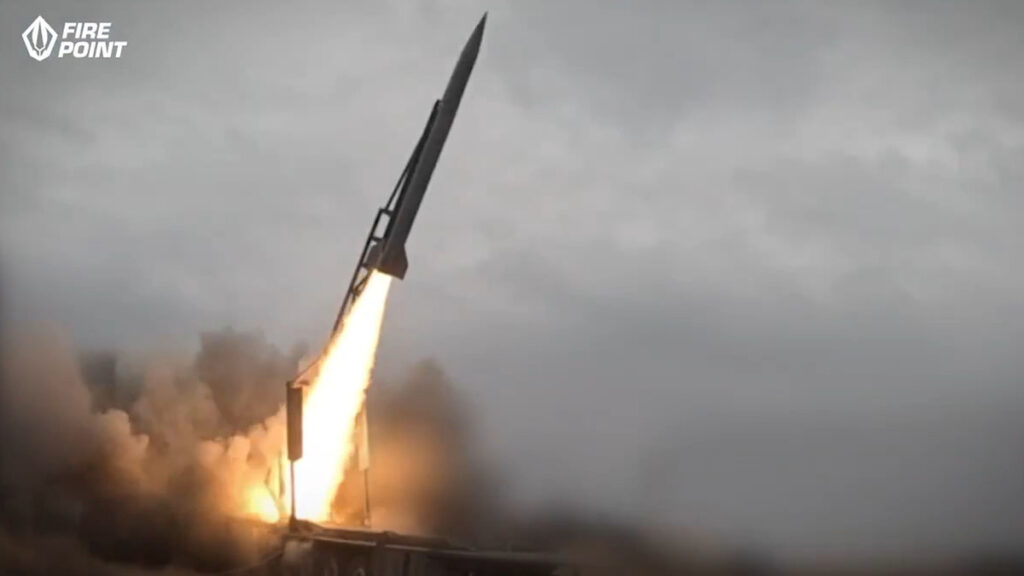
If previously constant danger was primarily characteristic of settlements located near the line of combat contact, now long-range strike weapons and the massive use of jet-powered unmanned systems from China are increasingly turning a significant part of Ukraine’s territory, including the capital region, into a space of prolonged and repeated direct kinetic attack, during which civilians die, infrastructure is destroyed, landscapes are damaged, and so on.
This is reported by Hryhorii Liubovets and Valerii Korol, employees of the NGO “Center for Communication and Content Security,” specifically for the Prompolitinform portal.
This fundamental change in tempo and scale matters not only for the direct protection of the civilian population. Constant air raid warnings, repeated attacks, and the need to respond to them continuously are changing the very tempo-rhythm of public life. People are forced to interrupt work, study, rest, essential sleep, movement, economic and social activity. Thus, even in the intervals between direct strikes, an existential environment of permanent uncertainty is formed, in which the very possibility of normal future planning becomes more difficult, and the state of raising children is unequivocally paralyzed.
That is why contemporary air aggression should be viewed more broadly than a set of individual missile or drone attacks. Its consequences are simultaneously physical, anthropological, cognitive, and mental in nature. Physical – housing and infrastructure are destroyed, and most terrifyingly – people die. Anthropological – the conditions for full-fledged human existence, upbringing, rest, and sleep are destroyed. Cognitive – society is forced to constantly switch between activity and anticipation of danger. Mental – prolonged uncertainty exhausts the ability to maintain the habitual rhythm of life and plan for the future.
The combination of various types of unmanned systems, missile systems, and other technologies of collective Putinism from North Korea, Iran, Russia, Belarus, and China creates an increasingly complex environment for counteraction in Ukraine. Therefore, the issue is no longer only about the number of strike assets used, but about the speed with which the aggressor is able to adapt technologies, tactics of their use, and the geography of their application.
In this context, the Ukrainian experience matters far beyond the Ukrainian theater of genocidal aggression itself. Using Ukraine as an example, one can observe how the modern security environment is changing under the influence of massive, technologically adaptive, and multi-domain forms of aggression. What is happening today over Ukrainian cities is not only Ukraine’s problem. It is an experience that directly concerns the future security of the European space and the global community.
That is why the participation of European states, primarily EU and NATO countries, should be considered not only from the standpoint of assistance to Ukraine. It is about jointly developing adequate capabilities to counter the rapidly changing environment of direct glocal threats. Ukraine already has unique practical experience in detecting, repelling, and adapting to such attacks, and at the same time continues to need a qualitative increase in the quantity and variety of means, technologies, resources, and joint (allied) solutions to protect the population and critical infrastructure of the European space.
This opens up the possibility for a qualitatively different civilizational model of partnership – not just to supply Ukraine with the necessary response capabilities in a measured manner, but to jointly create new European and Euro-Atlantic direct-action capabilities. This concerns the development of air and missile defense, unmanned and anti-drone technologies, early warning systems, cyber and information security, critical infrastructure protection, as well as joint study of the experience of the modern mosaic of glocal aggressions.
At the same time, it is no less important to see a risk of a different nature. If the aggressor’s technological adaptation occurs faster than the adaptation of collective security systems, a glaring asymmetry arises, which over time may become strategic. The technologies, tactics, production capabilities, and international ties of the aggressive regime and its allies may scale faster than states and international organizations manage to change their own response procedures, clinging to the practices of a peacetime past.
It is here that Ukraine can be not only a recipient of aid, but also a global leader in developing a new culture of glocal security. Ukrainian experience makes it possible to see the threat not only at the level of a single weapon or a single strike, but at the level of a systemic change in the environment of aggressions, which have become multi-simultaneous. This knowledge should be a shared resource for the implementation of the security policy of Ukraine and its partner-allies.
It is especially important to prevent a gap in understanding between the physical and non-kinetic dimensions of existential confrontation. The non-kinetic dimension of aggression can no longer be viewed as peripheral. When constant attacks simultaneously destroy infrastructure, disrupt the public tempo-rhythm, create cognitive uncertainty, and exhaust the mental capacity of the population, the response must also be comprehensive and direct. In such a case, protecting the sky means not only destroying aerial targets. It means preserving society’s ability to live, work, study, plan, create a future, and protect the space of allied countries.
That is why the formula “close the sky over Ukraine” has a much broader meaning than a targeted Ukrainian military-technical task. It is a way to prevent the global aggressor from turning Ukrainian territory into a testing ground for the constant scaling of new forms of glocal aggression. The longer such technologies and practices develop without a sufficiently rapid and systematic response, the more experience, production capabilities, and strategic advantages the aggressor accumulates together with its allies.
It is precisely the multi-complexity of the situation that requires Ukraine and its partners to honestly see the risks, regardless of institutional status or organizational scale. The EU, NATO, individual partner states, and Ukraine have different mandates, resources, and procedures, but they increasingly face a common task – not to allow the new regime of glocal aggression to become a habitual norm of the European security environment.
Therefore, today it is important to move from the question “how much more aid does Ukraine need?” to a broader question: what joint capability must Ukraine and Europe create right now to prevent the scaling of modern aggression from determining Europe’s security future? Ukraine is not asking Europe to simply share its danger and take on its share – Ukraine proposes to jointly transform the Ukrainian space of experience into a shared ability to see, understand, and stop civilizational threats before they acquire a planetary scale.
In this sense, the defense of Ukrainian skies is simultaneously the defense of Europe’s future. Not because Ukraine automatically replaces the European security system, but because it is here today that the new configuration of existential aggressions manifests most clearly – a configuration that Europe is already encountering, though not yet realizing it.
Conclusions
• The contemporary nature of Russian aggression by the Putin regime demonstrates that non-kinetic confrontation is no longer a peripheral or auxiliary dimension of existential confrontation. It occurs simultaneously with kinetic strikes and encompasses the physical, anthropological, cognitive, and mental environments. For Ukraine’s civilian population, even the direct sound of an almost continuous air raid siren becomes an element of this influence, because it interrupts activity, destroys the tempo-rhythm of life, maintains a state of constant uncertainty, and gradually exhausts society’s ability to act, plan, and recover.
• That is why the multi-scale non-kinetic aggression against Ukraine is simultaneously a signal to Europe regarding the modern understanding of the nature of today’s existential threat. If a society can be systematically deprived of a normal tempo-rhythm of life, imposed with constant uncertainty, have its critical infrastructure, informational and cognitive environment destroyed, and the response to this remains at the level of verbal reaction to individual attacks, a dangerous discrepancy arises between the scale of aggression and the scale of collective security.
• Ukraine pays the price of this discrepancy daily with human lives, destroyed infrastructure, interrupted activity, and the exhaustion of societal energy. Therefore, every minute during which the civilian population remains under systematic threat without a sufficiently rapid buildup of joint capabilities has not only a humanitarian but also a strategic dimension. What today ends in Ukraine in lives, health, time, and opportunities of people may tomorrow manifest in a different form in the European and global security space.
• This leads to a fundamentally different understanding of alliance. Alliance cannot be limited to political solidarity, ex post facto diplomatic-political responses to strikes, or waiting for the moment when the threat directly approaches the territory of member states. It must manifest in joint decision-action, joint production of capabilities, joint technological development, joint exchange of experience, joint adoption of systemically anticipatory decisions, and readiness to act selectively already, before the glocal scaling of the threat.
• The non-kinetic dimension requires special attention. If Europe views it only as information operations, propaganda, or cyber threats, it risks not seeing a much broader field of influence, dominance, and immersion – from the destruction of public tempo-rhythm and trust in institutions to the exhaustion of human capacity to resist and create a European future. Ukrainian experience demonstrates that these processes can no longer be separated from physical security.
• At the same time, the current situation also raises the question of the architecture of transatlantic security. Excessive dependence of European security on the readiness of the United States to act as the primary operator of security processes creates strategic vulnerability, especially if the real political, military, or resource priorities of the White House change. This is not a denial of the importance of the transatlantic alliance. On the contrary, it is an argument for Europe to build its own capacity to be an active subject of collective security, rather than merely its user, constantly postponing that time.
• Otherwise, a dangerous asymmetry arises, when global aggressive regimes learn, modernize, technologically adapt, and scale their capabilities already today, while democratic institutions may spend critical time coordinating procedures, political positions, and boundaries of responsibility. In such a situation, the problem lies not in Europe’s lack of potential, but in the insufficient speed of transforming it into operational capability, adequate potential, and force capable of pushing back aggression.
• That is why Ukraine should be viewed not as the periphery of European security, but as a glocal civilizational space where technological, organizational, and societal models of countering a new type of aggression and the forces of collective Putinism are already being developed today. Ukrainian society and the Defense Forces not only need help – they generate experience, knowledge, and technological solutions that can be critically important for the multi-dimensions of Europe’s security.
• In a broader international dimension, this also concerns the future of the world order itself. If states and international institutions are unable to respond in a timely manner to the scaling of glocal genocidal aggression, then international law, the principle of sovereignty, and collective security mechanisms gradually lose their preventive force. Then the international system risks transitioning from an order that restrains aggression to an order in which aggressive regimes gain time and space to accumulate advantages of domination.
• Therefore, the question today is not only how to protect Ukraine from the next attack. The question is whether Ukraine and its partners are able to jointly create a system of shared capabilities in which the technological, kinetic, anthropological, cognitive, and mental scaling of aggression will be stopped before it turns into a threat to the broader European space.
• In this sense, closing the Ukrainian sky, protecting the civilian population, and countering non-kinetic forms of aggression are not separate tasks of Ukrainian defense – they are a practical test of Europe’s ability to be a subject of its own security. Ukraine passes this test every day. Europe has the opportunity to pass it together with Ukraine, while the threat can still be stopped through joint decisions and actions.
Authors: Hryhorii Liubovets, Valerii Korol, NGO “Center for CCB”
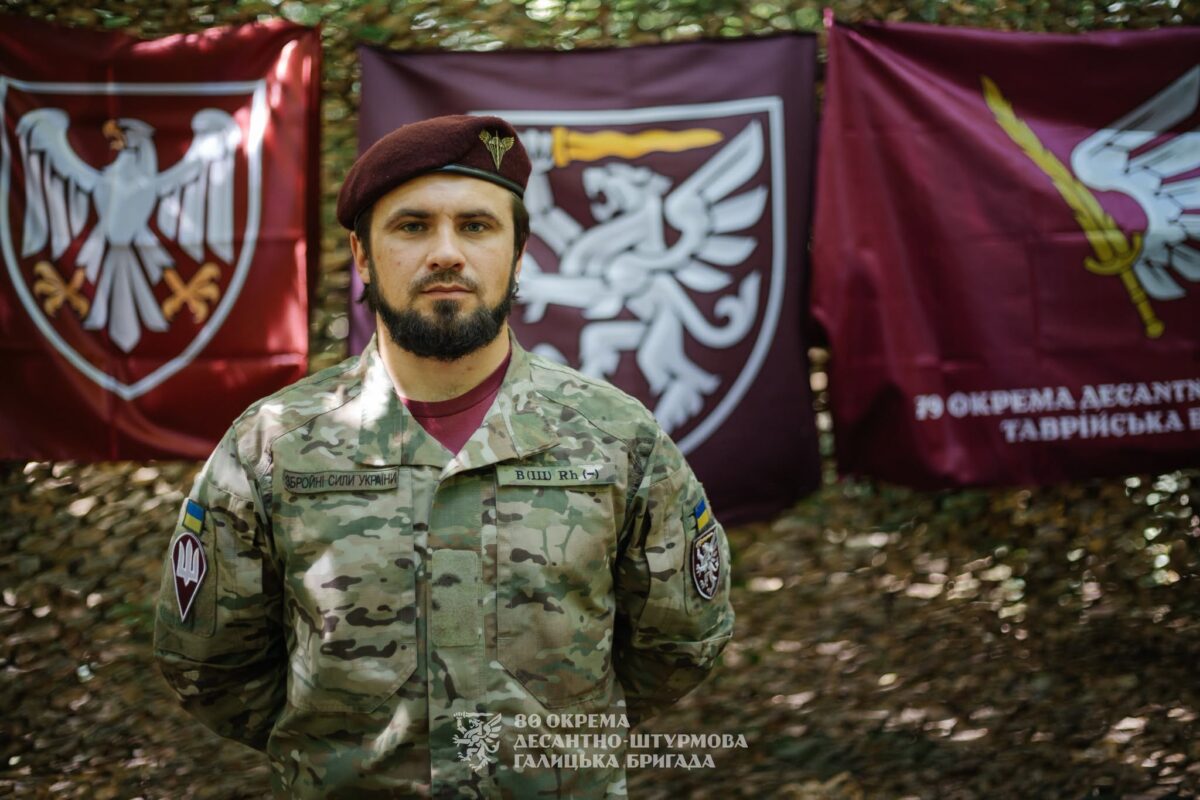
Photo: official Facebook page of the 80th Separate Galician Air Assault Brigade of the Air Assault Forces of the Armed Forces of Ukraine