Ukraine lost 1.2 billion dollars in arms procurement during negotiations for an EU tranche
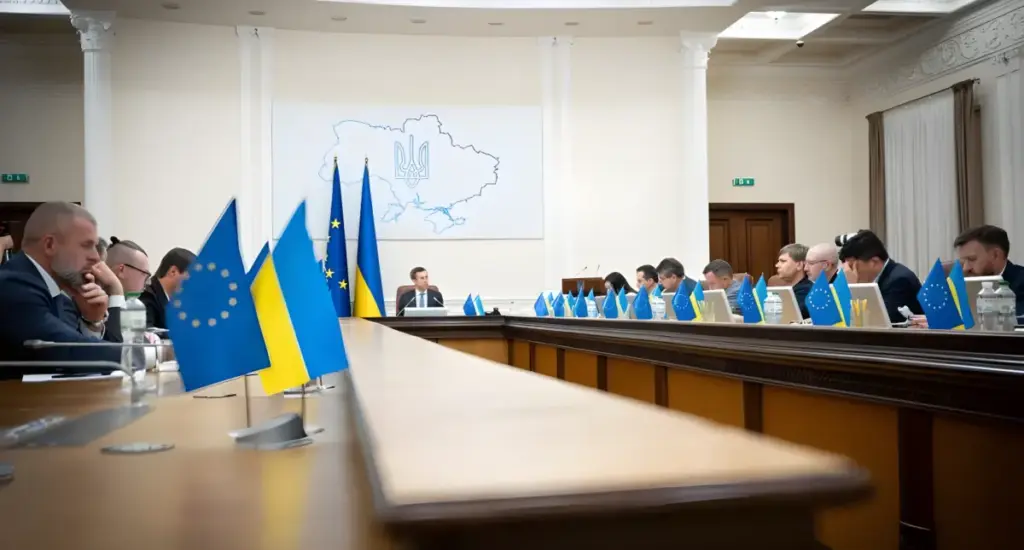
The financial capability of the state today looks like a parallel reality, where strategic achievements on the international stage are constantly offset by internal systemic failures. On one hand, the Government of Ukraine has just approved four bills aimed at strengthening control over budget expenditures and reforming anti-corruption policy. These steps are a direct instrument for receiving macro-financial assistance from the European Union in the amount of 1.45 billion euros, as stated in official announcements by the Cabinet of Ministers of Ukraine.
On the other hand, reports for the current year paint a much less optimistic picture of resource utilization efficiency within the country. According to materials from secret government audits cited by the New York Times, 2024 was a period of losses totaling about 1.2 billion dollars, resulting from schemes and ineffective management in defense procurement. This casts doubt on the success of the institutional mechanisms that are precisely being ‘reformed’ to meet the requirements of European partners.
Mechanisms of Budget Losses
The systemic nature of problems in the defense sector is striking in its persistence. Audits revealed that the Defense Procurement Agency, despite ongoing criminal proceedings, systematically continued cooperation with problematic counterparties. A striking example of such loyalty to individuals involved in cases was the conclusion of a 280 million dollar deal with the Pavlohrad Chemical Plant, whose head, Leonid Shyman, was under bail at the time, and the enterprise itself figured in a story involving the supply of defective shells.
Statistics regarding key manufacturers look even less encouraging: seven out of ten largest defense companies received state orders while having open criminal proceedings. Furthermore, 18 companies were recorded successfully signing contracts even in the absence of necessary licenses or after repeated failures to meet supply deadlines. Such practice indicates that risks to national defense often take a backseat to bureaucratic inertia.
Intermediation Instead of Competition
The economic inefficiency of defense procurement is not limited to unreliable suppliers; it is fueled by the conscious disregard for competition. Reports describe a case where preference was given to an intermediary, Czechoslovak Group, ignoring a significantly cheaper offer from the direct manufacturer, Arca Defense. The overpayment in this transaction amounted to about 130 million dollars, and auditors could not find any documentary justification for such a choice.
The situation surrounding attempts to purchase Soviet missiles through Serbian intermediaries, which ended with the intervention of Minister of Defence Rustem Umerov, is telling. Only the minister’s firm demand for direct negotiations with the American supplier, Regulus, allowed the dubious operation of the state enterprise Spetstehnoeksport to be halted. Currently, the state is in the process of collecting penalties under these contracts, which clearly demonstrates the price of negligence or abuse.
In parallel with these processes, meeting the structural conditions for receiving the EU tranche becomes a critical test for the state apparatus. The European Commission, as representatives of the institution note, is finalizing its assessment of the Cabinet of Ministers’ legislative initiatives, upon which the receipt of funds for social programs and infrastructure recovery will depend. Whether the announced anti-corruption measures and new control standards will be able to stop multi-million dollar leakages in the defense sector remains the main question, the answer to which will be revealed not so much by legislative activity as by real law enforcement practice.
Illustrative photo: Kabelleger / David Gubler (http://www.bahnbilder.ch) / CC BY-SA 3.0
Read also: