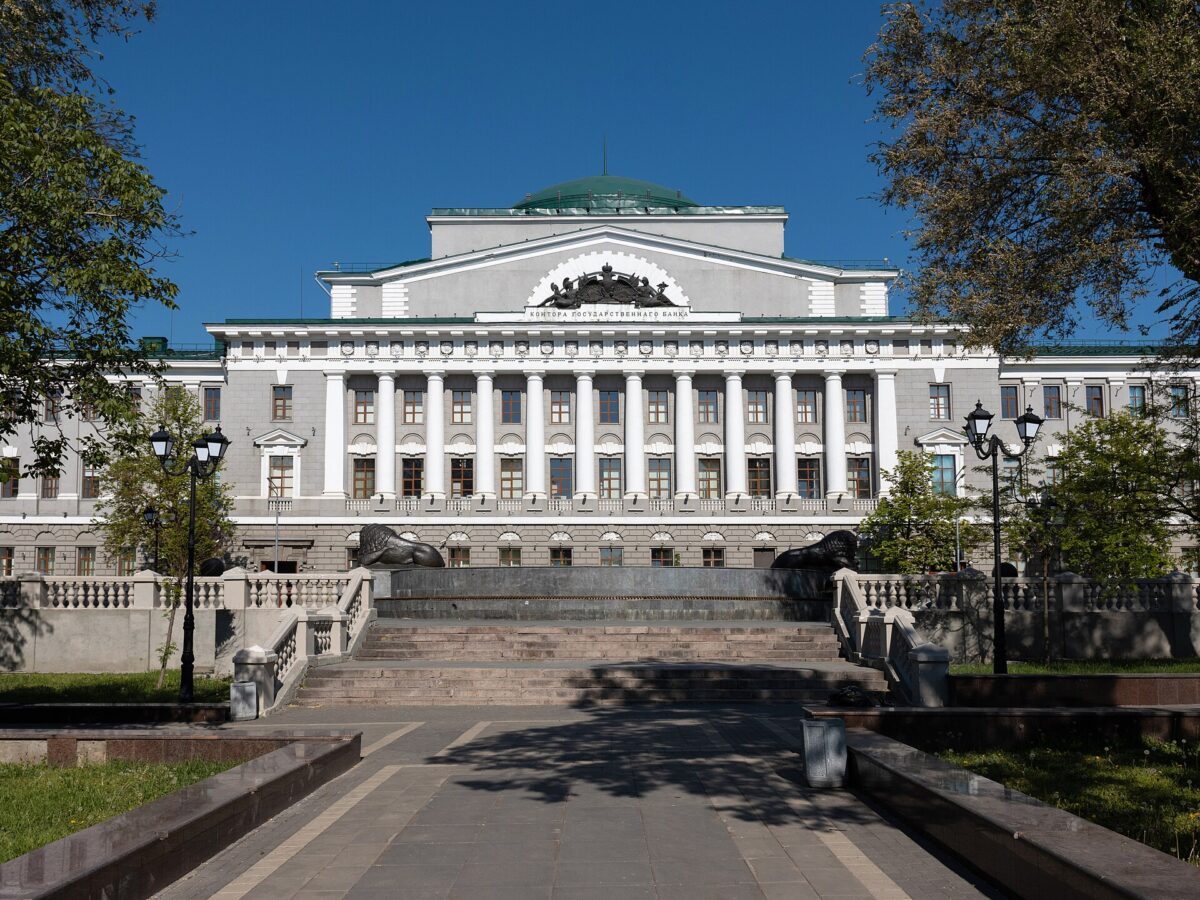
Capital investments in Russia turned negative again in the third quarter
A major survey of 11,500 enterprises revealed a continued decline in Russian business investment activity. Capital expenditure is expected to fall by 5.4% this year, following a 9.9% drop in the first half. Companies cite a lack of internal funds, weak demand, and high economic uncertainty as the main causes. This was reported by The Moscow Times citing Central Bank of Russia, according to the portal PromPolitInform.
In the third quarter, business sentiment regarding investment in the aggressor country dipped below zero once again. A similar sharp decline in capital expenditure was recorded in the first quarter, when investment plunged by 14,3% year-on-year—the worst performance since 2009—and during the 2020 pandemic.
According to the survey, 26.7% of respondents identified a shortage of internal financial resources as the primary obstacle to growth. Other key factors included insufficient demand (20.8%) and general economic unpredictability across the country (25.8%).
Declining Profits and Increasing Tax Burden
Over the first seven months of the year, Russian corporate earnings totaled 13 trillion rubles, marking the lowest figure since 2020 and a 15.7% drop compared to the previous year. Furthermore, every third company in Russia operated at a loss.
The situation is further complicated by a corporate profit tax hike taking effect in 2025. Because internal funds account for more than half of all capital expenditures, the depletion of these reserves leaves businesses unable to fund new projects.
Impact of War and Political Risks
Alongside financial constraints, economic uncertainty remains a major impediment. Investment decisions are heavily suppressed by unpredictable tax hikes, rising military expenditures, asset seizures, and criminal prosecution of business owners.
Attacks by Ukrainian drones on Russian oil refineries, marketplace warehouses, and data centers have added another layer of risk. “If you don’t know what will happen tomorrow, you’d better do nothing at all and not invest,” noted Igor Nikolaev, chief researcher at the RAS Institute of Economics.
Vladimir Potanin, the principal owner of Norilsk Nickel, also emphasized that it is extremely difficult for businesses to plan investments without clear rules on how the state extracts corporate income.
Sectoral Disparities and Future Outlook
According to Russia’s central bank, investment dynamics vary significantly by sector. Moderate growth was recorded in retail trade and logistics, which analysts attribute to the need to rebuild capacity damaged by drone strikes. Meanwhile, basic industrial sectors remain in a prolonged investment freeze.
Official government forecasts do not expect investment growth to resume until 2028. Minister Maxim Reshetnikov admitted that reaching even these targets will be difficult without additional measures, while economists warn that the broader economy cannot grow amid such capital spending declines.
Illustrative photo: Vyacheslav Argenberg / CC BY 4.0