The list includes 37 foreign electronic components and equipment from 28 companies
The Main Directorate of Intelligence of the Ministry of Defence of Ukraine has published information on the key components and manufacturers of Kometa navigation systems used in Russian missiles and drones. The agency identified 37 foreign parts and 28 enterprises involved in the process. This is reported by the portal PromPolitInform, citing information from Defence Intelligence of Ukraine.
Data regarding the technical equipment of Russian navigation modules that protect onboard systems against electronic warfare measures has been published on the War&Sanctions portal. To counter interference, the enemy utilizes controlled reception pattern antennas capable of analyzing and isolating external signals.
The main structural unit of the Kometa is an antenna array coupled with a field-programmable gate array (FPGA). Currently, the Russian military-industrial complex is mass-equipping its equipment with 16-element modules, launching serial production of 20-element arrays, and employing 32-antenna units of Chinese-Alabuga production.
Production Capacities and Developers
VNIIR-Progress, part of the ABS Electro group, is responsible for developing technological solutions for the modules. The company holds patents for key designs, while JSC VNIIR handles the procurement of microelectronics for serial production. Orders, which exceeded 100,000 units in 2026, are fulfilled by both the group’s own facilities and several contract companies, such as Pantes and Erikon.
In total, 28 companies are involved in the process, including intermediaries from China. The production line utilizes 13 units of foreign technological equipment, enabling the manufacture of products for cruise missiles, guided aerial bombs, and strike drones.
Foreign Electronics in Russian Armament
Among the 37 disclosed foreign components, microchips manufactured by Intel and products from Analog Devices and Linear Technology are of particular importance. These elements facilitate signal processing and radio frequency circuit operation, which is critical for the stability of navigation systems.
Due to international sanctions and stricter export controls, the supply of these parts has become increasingly difficult, forcing Russian enterprises to seek alternative channels. The intelligence agency emphasizes that further restricting Russia’s access to critical technologies undermines the aggressor’s military potential.
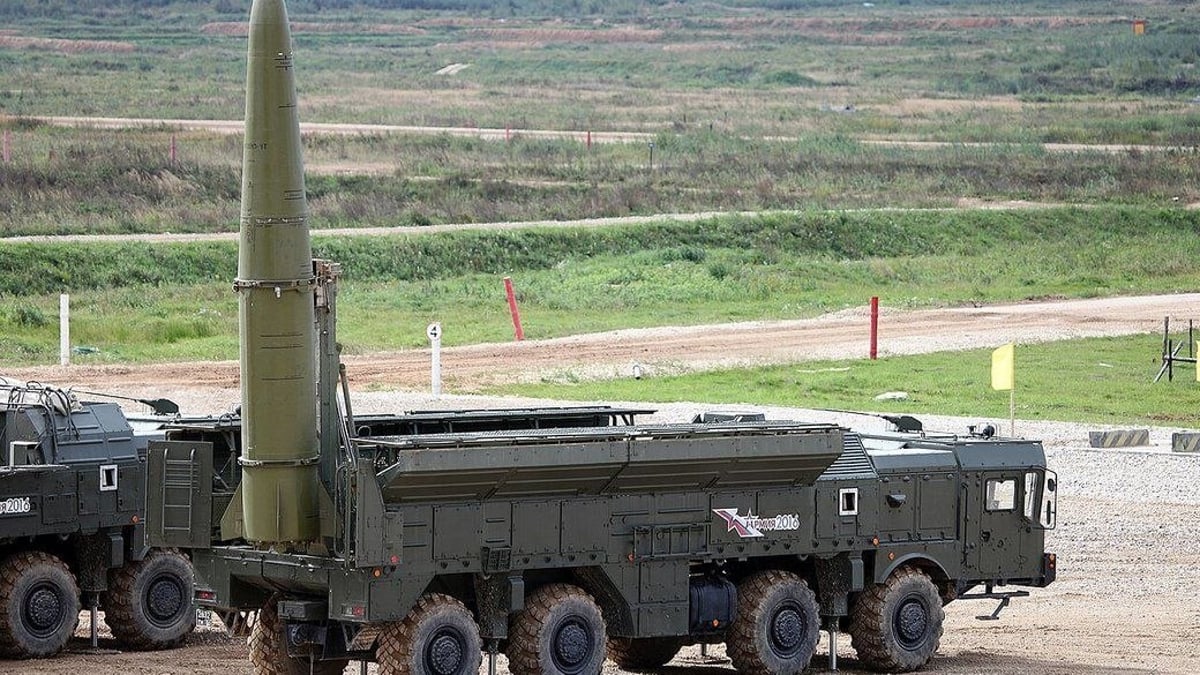
Photo from the web
Read also: Children of military and veterans train in drone piloting in Kyiv