Cargo includes human brain and heart models for orbital medical experiments
The SpaceX Dragon spacecraft has delivered more than 6,300 pounds of cargo for NASA scientific experiments to the International Space Station. Launched on October 13, 2026, as part of the SpaceX CRS-35 mission, the spacecraft successfully docked at the station on October 15, 2026. This was reported by Discover Magazine citing NASA, according to the portal PromPolitInform.
The delivered orbital cargo contains equipment and samples designed to investigate how space conditions affect the human body. Specifically, the station received specialized laboratory models of the human brain known as miBrains.
The AVATAR-ORg1 project will monitor these samples over five weeks and compare them with control tissues maintained on Earth. The results will help scientists evaluate the feasibility of growing neural tissues in microgravity to protect astronauts during future missions.
Studying Neurodegenerative Diseases
Another scientific initiative called MINDS focuses on examining the link between inflammation and neurodegenerative diseases. Utilizing combined cell structures will allow researchers to explore potential new treatments for Alzheimer’s, Parkinson’s, and multiple sclerosis.
In addition to the nervous system, scientists will study cardiac function through the Stellar Spheroids experiment. This project examines 3D models of human heart tissue in microgravity to support disease research and future drug testing.
Building an Artificial Retina in Space
Particular attention is given to the LambdaVision-1 biotechnology project, which tests the manufacturing of artificial retinas in orbit. Earth’s gravity causes inconsistencies in layers of the light-activated protein bacteriorhodopsin, whereas microgravity is expected to yield uniform stability.
The artificial retina is being developed to restore functional sight to patients suffering from retinal degenerative diseases. Ground-based production methods create structural defects due to gravitational forces, making orbital experimentation critical.
Protecting Astronauts’ Health
To monitor crew health, the ELISA MABL device was delivered to the station for measuring antibodies and proteins directly in space. This tool will allow astronauts to quickly address medical issues such as bone density loss caused by microgravity.
Meanwhile, the GEARS experiment will investigate two antibiotic-resistant bacteria, Enterococcus faecalis and Enterococcus faecium, found aboard the station. Researchers aim to understand how such microorganisms adapt in enclosed environments to protect the crew from potential infections.
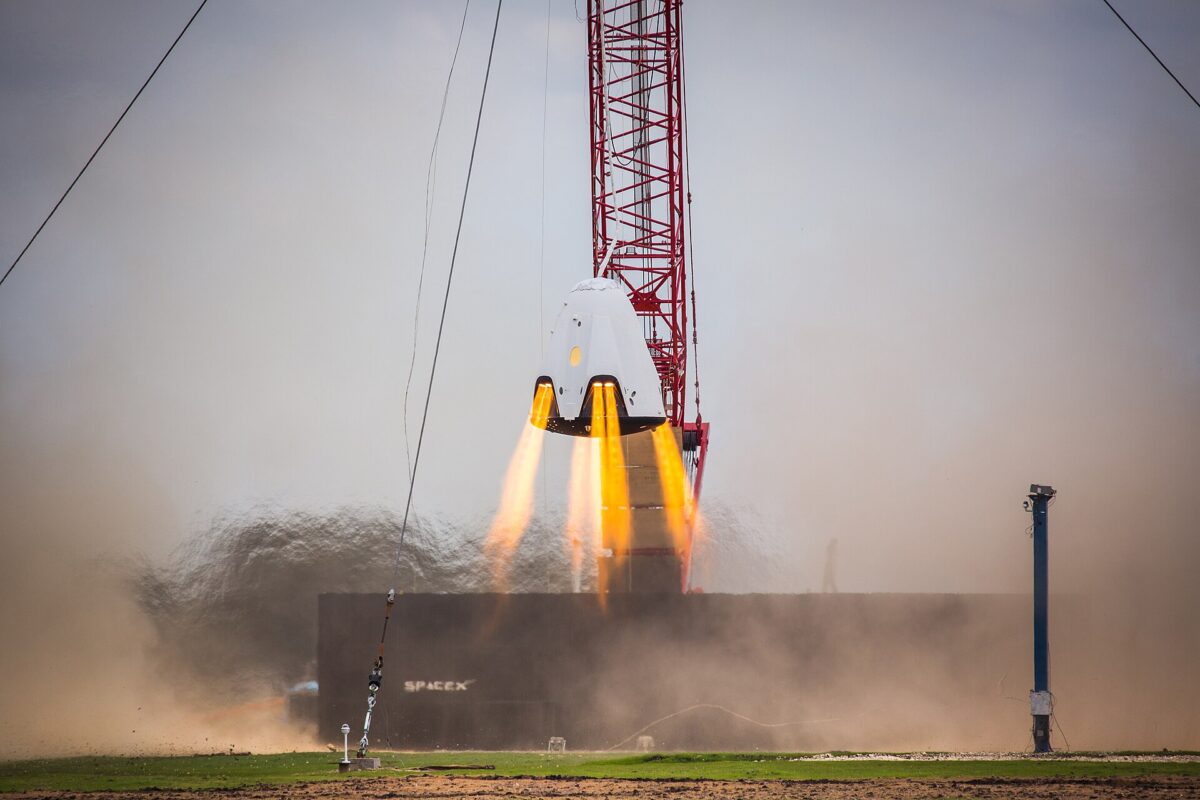
Illustrative photo: SpaceX Photos / CC0
Read also: Unknown individuals attempt to set fire to Starlink equipment storage facility in Lithuania