The EU, China, and developing nations have faced the largest financial burdens
Due to the blockade of the Hormuz Strait between March and August 2026, global fossil fuel importers paid $330 billion more than pre-war forecasts. These figures were released by the Centre for Research on Energy and Clean Air (CREA). This was reported by Liga.Business citing CREA, according to the portal PromPolitInform.
Average monthly additional fuel costs reached $55.3 billion, an amount comparable to global investments in renewable energy for the entire year 2025. Conflicts in the Middle East and restricted shipping caused the longest price shock in the oil market in 36 years.
According to analysts, the cost of Asian liquefied natural gas (LNG) rose by 75%, and European LNG by 60%. Diesel and gasoline prices climbed by 59% and 43% respectively, while Brent crude oil prices increased by 35%.
Geography of financial losses
The largest volume of additional expenses was recorded in the European Union, totaling $78 billion. China spent $35 billion on imports, with India also suffering significant losses. For low-income economies, overpayments averaged 1% of GDP, which for countries like Egypt is equivalent to five days of national income.
Meanwhile, certain regions profited from high energy prices. The Middle East earned $61.2 billion, North America gained $47 billion, and Russia pocketed $35.9 billion. Analysts point out that current market conditions have provided Moscow with an additional source of export revenue.
The impact of alternative energy
Countries that have been developing green energy since 2020 were able to significantly mitigate the crisis’s impact. During the first five months of the standoff, savings on gas, coal, and oil purchases due to existing renewable capacities exceeded $36 billion. China and Japan achieved the greatest economic benefit.
Currently, according to Axios, about 10 million barrels of oil per day are being transported through the Hormuz Strait. This represents roughly 50% of the volumes recorded before the blockade began.
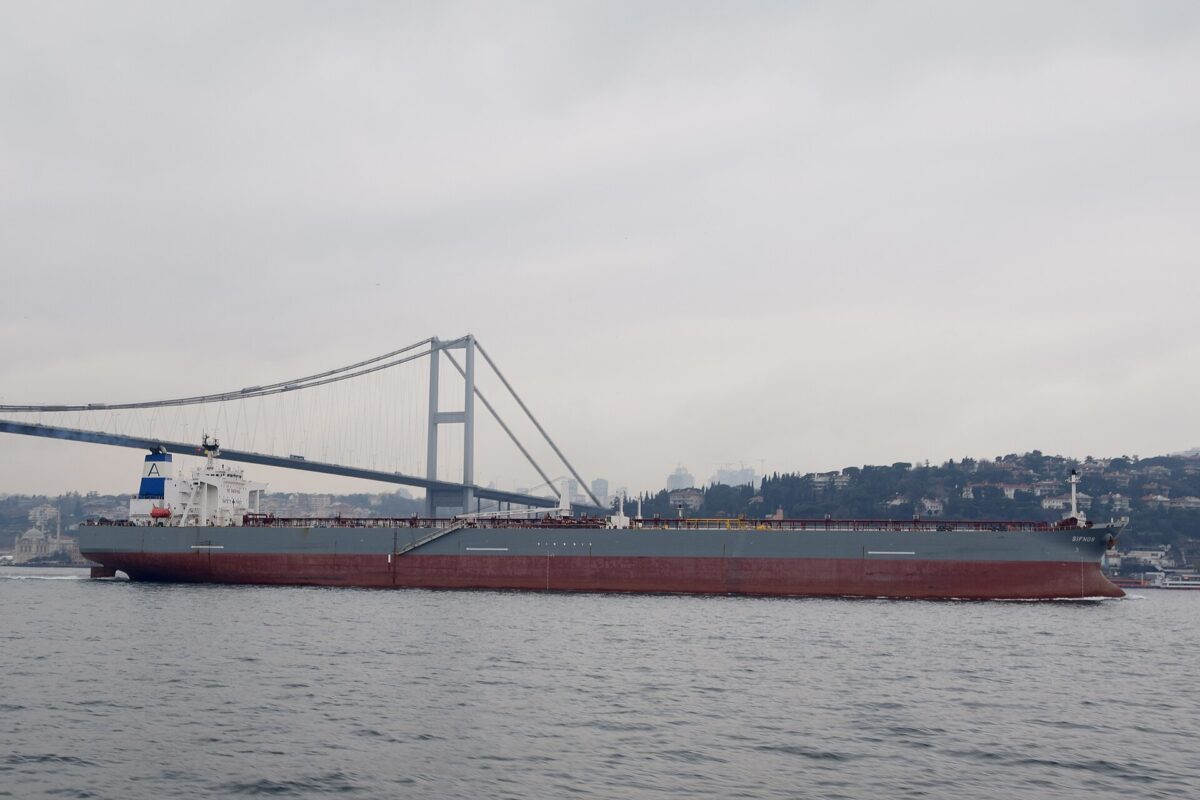
Illustrative photo: Ank Kumar / CC BY-SA 4.0
Read also: Iran threatens neighbouring countries over participation in US economic war