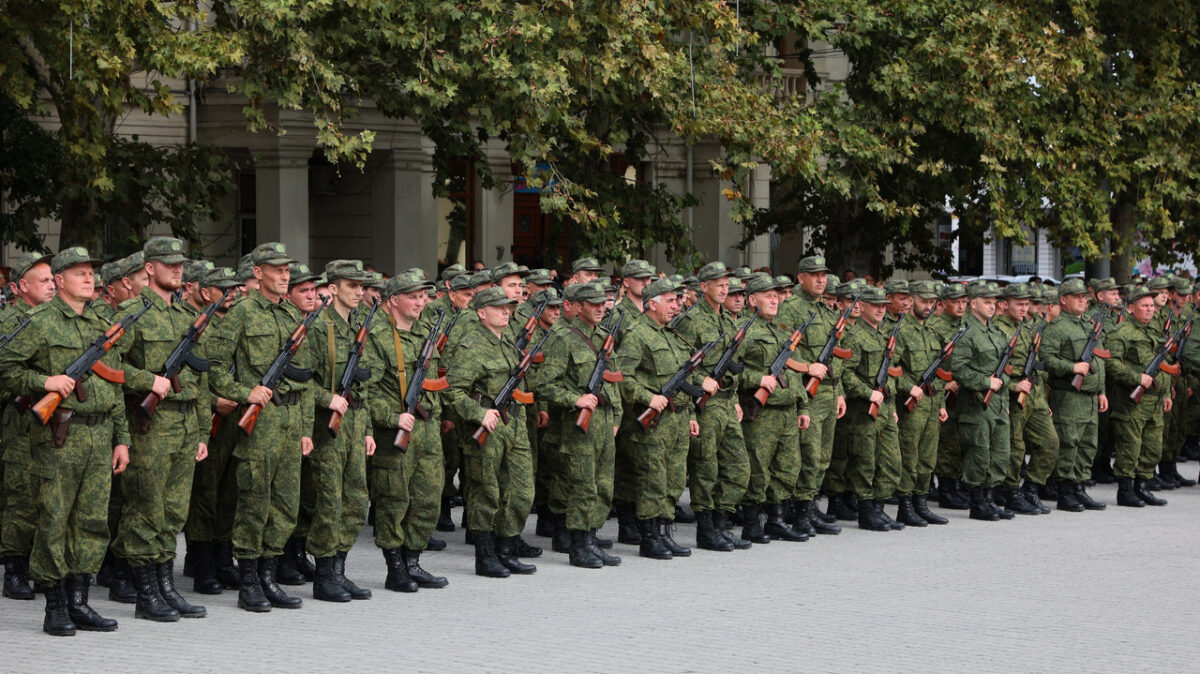
The Kremlin seeks to compensate for high battlefield losses and falling contract recruitment
The Russian Federation is developing plans for a new wave of mobilization, expecting to conscript 300,000 people annually. The measures are scheduled for 2026 and 2027 to reinforce existing units and form new ones. This was reported by Ukrinform citing Main Directorate of Intelligence of the Ministry of Defence of Ukraine, according to the portal PromPolitInform.
The Russian General Staff plans to mobilize a total of 600,000 troops. According to intelligence reports, strengthening the occupation forces’ personnel is a forced reaction to the loss of strategic initiative on the front lines and a sharp decline in the number of individuals willing to serve under contract.
Statistics for January-July 2026 show a critical imbalance between losses and reinforcements for the Russian army. During this period, the occupying forces lost about 240,000 personnel, while only 232,000 recruits signed contracts. This has led to a re-evaluation of recruitment methods and increased pressure on regional authorities.
Changes to criminal legislation
To secure additional human resources, Russia is amending its legal framework. Categories now eligible for mobilization include individuals with unexpunged criminal records for serious offenses, such as the illegal handling of radioactive or narcotic substances, as well as banditry. There is also discussion regarding the mobilization of women serving sentences in correctional facilities.
Control over military registration within law enforcement agencies is also tightening, with quotas being prepared to send personnel to the front. Training for new recruits is expected to last between 15 and 60 days, with the potential use of training grounds in Belarus.
Social tensions in regions
Russian leadership acknowledges rising discontent with the war, which reaches 69% in some regions. The greatest difficulties in meeting recruitment targets are noted in the Oryol and Vladimir regions, Dagestan, and the Volgograd region, where the influx of volunteers has dropped by 40% compared to last year.
As the pool of potential recruits, which previously included students, debtors, and migrants, is being depleted, a system of electronic mobilization orders is being introduced. Simultaneously, restrictive measures are being prepared for draft evaders, including the blocking of bank accounts and prohibitions on real estate transactions. A final decision on launching the new wave is expected following the State Duma elections in September.
Illustrative photo: Управление информации и пресс-службы Главы Республики Крым / CC BY 4.0
Read also: Russian occupation forces begin recruiting Indonesian citizens for the war against Ukraine