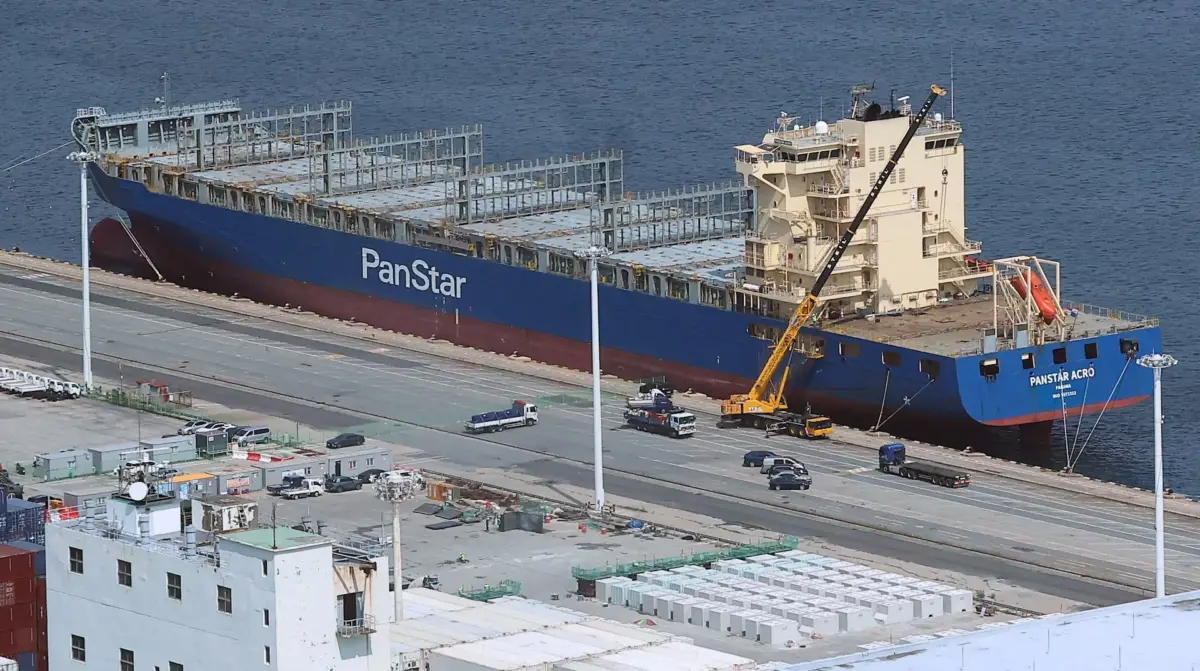
The South Korean container ship PanStar Acro is departing on its first test voyage to Europe via the Northern Sea Route. The country's authorities aim to assess the commercial viability of this Arctic shipping passage. The journey is expected to take between 40 and 45 days.
This was reported by Economichna Pravda citing Reuters, according to the portal PromPolitInform.
The vessel is setting sail from South Korean ports northward, bypassing Kamchatka, crossing the Bering Sea, and navigating through Arctic waters. On its way to Europe, the container ship will make port calls at Felixstowe in the United Kingdom, Rotterdam in the Netherlands, and Gdansk in Poland before making its return journey.
The government-backed project aims to turn the South Korean port of Busan into a global maritime hub and establish a regular commercial trade route through the Arctic by 2030. Developing Arctic shipping is a top priority for President Lee Jae-myung.
Maritime safety and geopolitical risks
Using this shipping lane could create tensions with South Korea’s Western allies, who are seeking to isolate Russia over its war against Ukraine. Officials in Seoul held consultations with Moscow regarding the conditions of the voyage and assistance in case of emergencies, such as icebreaking support if trapped in ice.
For this trial voyage, the 2,758 TEU capacity container ship operated by PanStar was loaded with 837 TEU of cargo. Its payload includes auto parts, chemical products, and about 100 empty containers.
Dynamics of Northern Sea Route usage
Traffic intensity along Arctic shipping routes continues to rise. According to the Centre for High North Logistics in Norway, 88 vessels completed 103 transit voyages along this route last year. By comparison, 97 such voyages were recorded in 2024 and just 43 in 2022. Most of the current traffic is driven by vessels from Russia and China.
Scientists note that melting Arctic ice makes navigation easier, though increased shipping activity in turn accelerates global climate change.
Photo: Economichna Pravda
Read also: Trump introduces tariffs up to 100% on UAV imports and components