What has Europe taught me and what do I still disagree with?
In this article, I will talk about internal conflicts, clashes with my own prejudices, and the need to change my thinking patterns while in emigration. You need to be prepared for this as well.
I am an emotional person: I process events and people through my heart, perceiving them through my own feelings, sympathies, and antipathies. I must say right away that I was not prepared to encounter a European society that unites people of the most diverse nationalities, faiths, and cultural traditions. Every European country is now like a map of the world in miniature, and one must be attentive to one’s reactions here.
Stopping your gaze on an African woman or a girl in traditional clothing, for example, might seem like simple curiosity, but for the person opposite, it can be unpleasant. Now we both live in the same country and share a common space. I am not even mentioning how careful one should be with one’s own statements in public places, among classmates, colleagues, or new acquaintances from other countries.
From my own experience, I saw how a German language teacher on our course unintentionally offended a Chinese woman by making a joke about “slanted eyes.” This rash joke cost him, a respected professor and German teacher, a public apology before the entire audience.
A guy from a North African country once joined our course. He was quickly mastering German, despite the colossal difference in spelling, sound, and rules compared to his native language. We communicated well; the group was friendly, so the initial tension between us quickly disappeared, giving way to fun jokes. My joke about African pirates, however, did not please him, and this turned into a confrontation. You never know what words might hurt a person, especially if you do not know their personal history and experience.
Now I am even ashamed to admit how many times I ended up in awkward situations and inadvertently offended people where I could not have even imagined. But I myself was also offended more than once by the straightforward questions of neighbors who were immigrants from the Middle East. It is not quite common for us for strangers to ask blunt questions like “Do you drink vodka?” or “Where is your husband?”
By the way, in the phrasing of questions, we and the Germans are quite similar: we start with “Could you tell me…” or “If it’s not too much trouble…”. We also often approach a question “from around the corner” rather than hitting it head-on.
We in Ukraine were not used to working, befriending, and simply living in a neighborhood with people of different cultures and traditions on such a scale. Europe teaches this immediately—through personal encounters, language and integration courses, and daily communication. Here you gradually realize that not all questions are appropriate, and personal boundaries matter. You are not obliged to talk about your religious beliefs, sexual orientation, political views, or other personal matters. Even during a job interview, you have the right not to answer questions about your private life if they do not relate to the legal requirements of the position.
Emigration forces you not only to learn someone else’s rules but also to re-evaluate your own automatic reactions. I am used to one way of communicating, another person to another. I can unintentionally offend someone, or I can feel offended myself. And the hardest part for me was learning not to perceive every such situation as a personal attack, but to try to understand where this misunderstanding comes from.
But my mental shifts at the beginning of emigration were significantly deeper than just reactions to awkward phrases or jokes in this peculiar battle of mentalities.
Once at a store, I did not notice that a woman was already standing in line, but from the other side. It turned out that I bypassed her and started paying for my items first. I realized not only by her indignant facial expression that I had made a mistake, but I also heard the phrase she threw in my direction: “Scheiße Ukraine, hier bekommen sie alles, und zwar alles auf einmal” (roughly: “… Ukraine, here they get everything, and all at once”).
“Scheiße Ukraine,” I thought. This phrase hurt me deeply. We didn’t want to become refugees. We are ashamed that we are now everywhere, and it is painful that many of our people are no longer around…
It seems to me that adapting to another culture or a mix of cultures does not mean automatically tolerating all insults. It is not necessary to always be careful or constantly give in. I am still learning to respect other cultural features, sometimes rethinking my own prejudices, and trying to be more delicate. But for me, this does not mean that someone has the right to humiliate me just because Germany, other EU countries, and others have given us shelter from the war.
As I already wrote in the first article of my blog, my professional life in Ukraine was brighter than the expectations of the Germans who saved me from the war. And so, our goals were different. I do not consider physical labor at a warehouse or at McDonald’s humiliating, but for me, such employment could only be an intermediate stage, because in Ukraine I was used to something else. And this applies not only to me but to many Ukrainians who arrived in Europe with degrees and work experience as managers, teachers, and doctors.
Plans to fill niches where there is a shortage of local labor appeared between the lines both in the German language textbooks themselves and in the name of the courses—”German for work.” Our vocabulary was replenished with words like Gabelstapler (forklift), Werkzeug (tool), or Nachtschicht (night shift). And this vocabulary somehow caused me a real hysteria. How will this be useful to me? And why am I spending my time on a whole cemetery of words and expressions that I do not want to use in my own communication at all?
“Everything is logical,” we discussed in the course. “The courses are paid for by the BAMF (Federal Office for Migration and Refugees of Germany), and it controls our attendance and progress. That is why a government organization determines the direction in which all this should move.”
Sometimes it even seemed to us that the opportunities to improve our German were as limited as the students’ chances to show higher results.
By the way, it was in Germany that I changed my attitude toward manual laborers in warehouses and toward low-skilled work in general. In my consciousness, as in the mentality of many people from the post-Soviet space, a certain devaluation of such work had long been deeply embedded. Because in Europe, you might not be asked exactly what you do for a living. It is more important that you pay taxes and insurance premiums, have a stable income, pay off loans, and plan your annual vacation in Mallorca…
Your work, your profession is primarily a personal choice, not an indicator of status and success in the eyes of others. My stereotypes that the professions of an electrician, driver, or welder are exclusively for men, and only women can be caregivers in nursing homes, also disappeared. Girls can handle traditional male work perfectly well, and guys can handle caring for people. That is what equality is.
Men still hold the door for me at the entrance, let me pass first, and I am happy that I receive flowers as a woman. But other psychological shifts are still ahead. Because in emigration, you gradually adapt to everything that is in the country, and you realize: when in Rome, do as the Romans do…
We came to Germany under Section 24, and a whole set of rules, restrictions, and opportunities that Germany, in particular, has developed for us automatically applies to us Ukrainians. Most perceive this as unconditional support and new opportunities, and this is also positive.
Many Ukrainians are interested in whether it is possible to live in Europe at one’s own expense. How much money is actually needed for insurance, medicine, housing, and everything else? I will talk about this in the next article.
Author: Iryna Lukianets, Ukrainian volunteer and emigrant
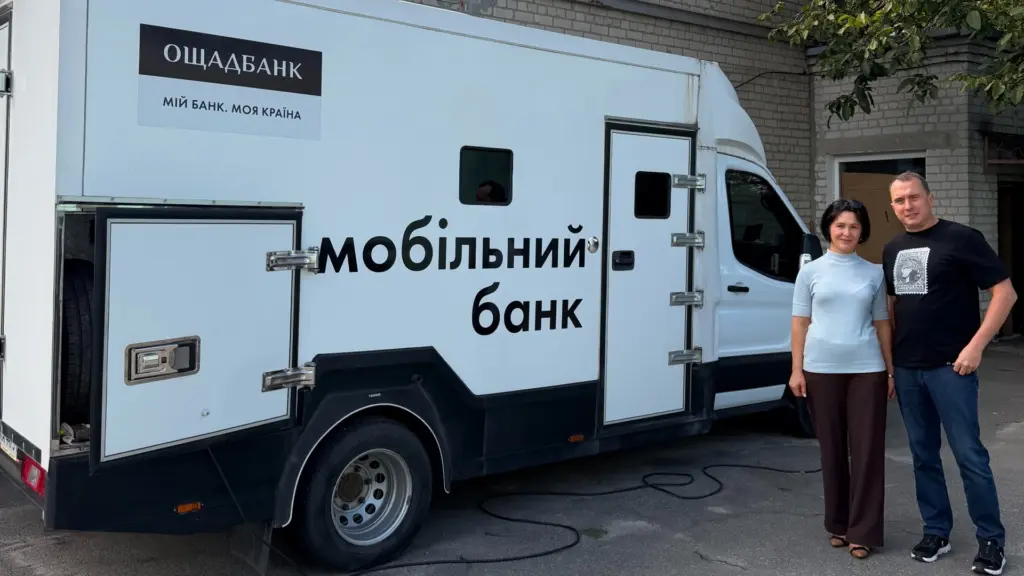
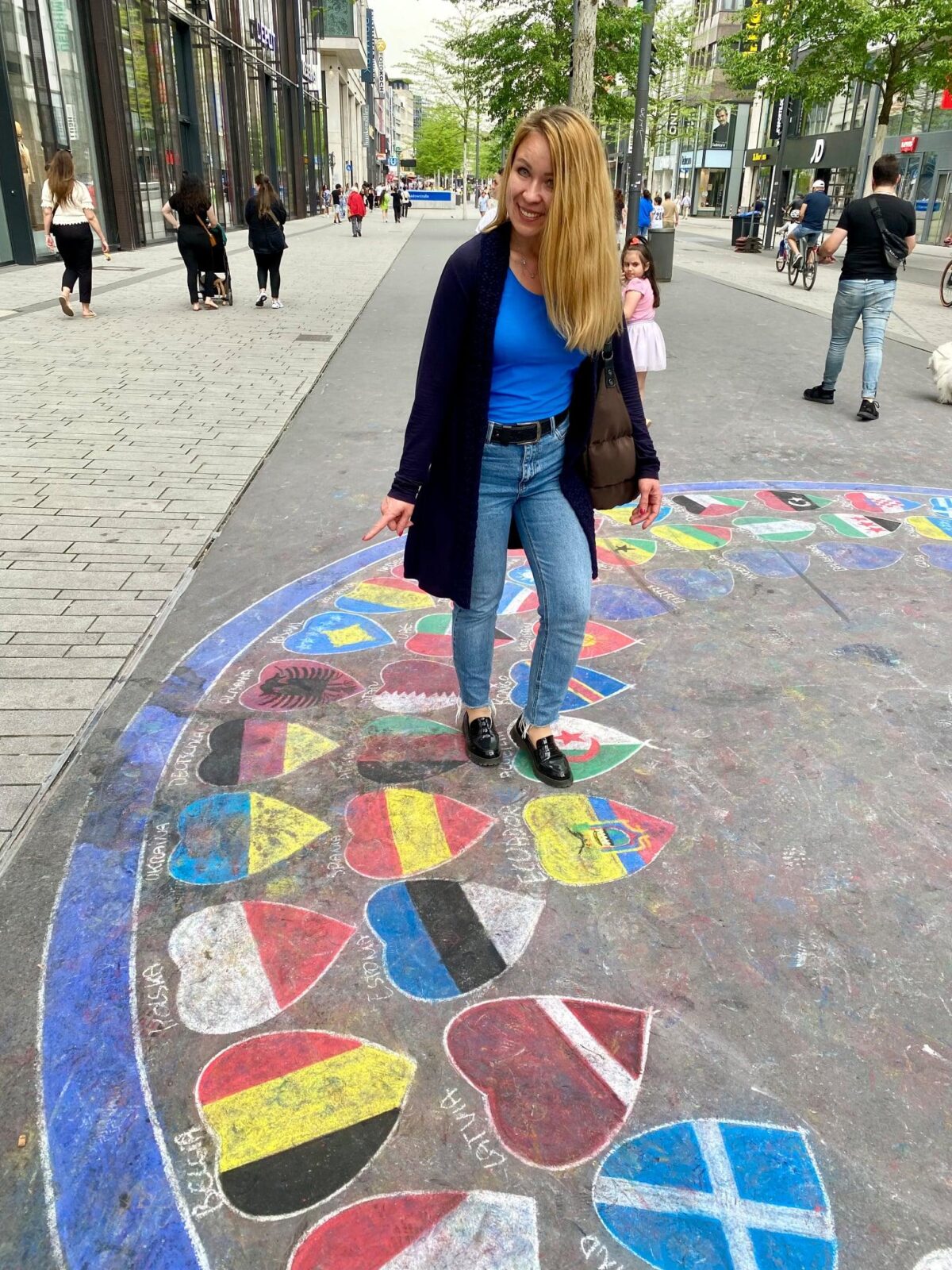
Photo of the author
Photo from the web
Read also: Iryna Lukianets: My experience of emigration to Germany